Italy Digital Nomad Visa: Full Cost Breakdown and 2026 Processing Timeline
Get the real total cost of the Italy digital nomad visa in 2026: from €116 consular fee to €1,000-€3,000 with residence permit, translations, and insurance.
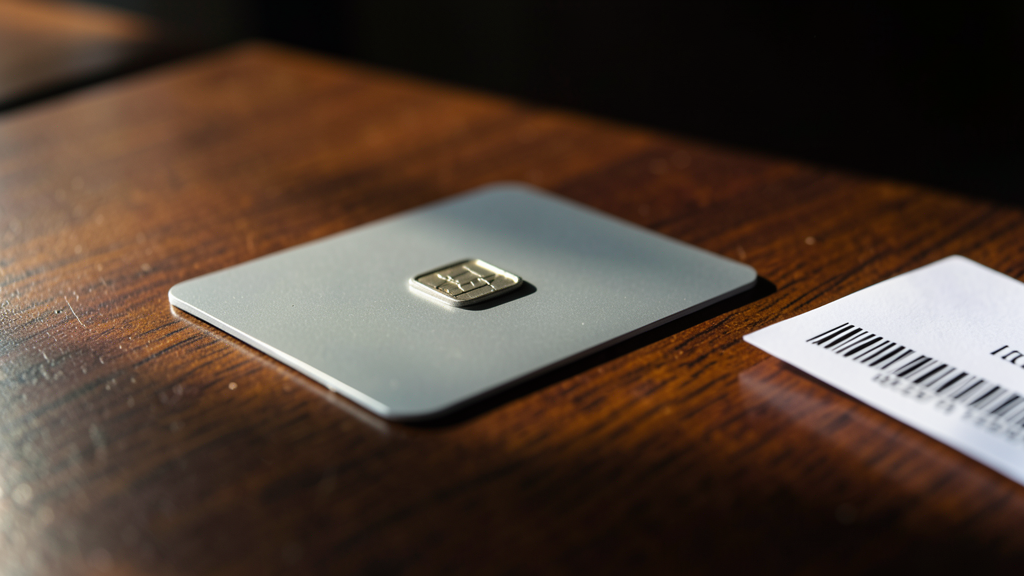
The Italy digital nomad visa’s sticker price is ~€116 1[[13]], but the real cost sits in the residence permit and document preparation. Budget €250–€450 for the bare-minimum DIY route 2; plan on €1,000–€3,000 if you pay for certified translations, health insurance, and professional help 3. Processing times depend entirely on your consulate and whether you are an employee or self-employed: remote workers can get a visa in 30 days at the Paris consulate 1, while self-employed applicants face up to 120 days at London 4 and Paris 1. The residence permit adds another €70–€160 2 and 2–6 months 2, and you must apply within 8 working days of landing 5.
- The conslar visa fee is ~€116, but it adjusts quarterly with the EUR/USD exchange rate 1[[5]].
- No work clearance (nulla osta) is required 5, but you need the permit after arrival within 8 working days 5.
- Residence permit costs run €100–€160 once you add the stamp duty (€30.46) and postal fee (~€30) 2.
- Self-employed applicants face visa processing of up to 120 days; remote employees can get decisions in as few as 30 days at some consulates 1[[10]].
| Cost component | Typical amount | What drives the range |
|---|---|---|
| Conslar visa fee | ~€116 (quarter-adjusted) | EUR/USD exchange rate on adjustment dates; pay in local currency at some consulates 1[[5]][[13]]. |
| Residence permit (permesso) | €100–€160 | Includes permit fee €40–100, €30.46 stamp duty, ~€30 postal fee 2. |
| Document preparation (translations, apostille) | Included in total | DIY low cost or professional translation services; varies by country of origin 2. |
| Health insurance (minimum coverage) | Included in comprehensive | Mandetory for visa; cost depends on provider. |
| Total, lean (DIY, no insurance cost detailed) | €250–€450 2 | Basic translations, minimal admin, no professional help. |
| Total, comprehensive | €1,000–€3,000 3 | Adds certified translations, apostilles, insurance premiums, and possible legal aid. |
Why the visa fee is never a single number
The consular visa fee for Italy’s digital nomad visa is widely reported as €1166. The Consulate General of Italy in Paris currently lists exactly that figure, as of 26 August 2026 1. But if you apply anywhere else — or on any other day, you may pay a different number. The fee moves every quarter, and some consulates never display a euro amount at all 7.
The mechanism is a quarterly adjustment tied to the official euro-dollar exchange rate. On January 1, April 1, July 1, and October 1 of each year the fee is recalibrated 7. The underlying charge is the national visa fee for stays longer than 90 days, a static euro amount set by regulation, but consulates that receive payment in another currency convert it at that rate. Paris happens to post a euro figure (€116 on its site this summer) 1, and that number has seeded countless guides and forum answers. The reality, however, is a fee that ticks up or down four times a year depending on where the euro trades.
That variability is invisible if you only read the Paris page, yet it governs what you will actually hand over at other consulates. The Consulate General of Italy in New York does not publish a fixed euro amount. Its visa page states only that the fee is the national visa fee category and that it is adjusted quarterly by the exchange rate 7. A New York applicant sees no euro sign: only a dollar price that reflects the current conversion. The same logic applies in London, Toronto, or any other consulate that charges in local currency.
The broad repetition of the €116 figure 6 is, therefore, a snapshot that has become a stand-in. It is the right ballpark (you will not be quoted€500), but it is not a guarantee. If you apply in Paris on September 15, you’ll see€116; if you walk into a post office in New York on October 2, the dollar amount will have caught up to the Q4 rate, and the equivalent in euros may differ by a few units.
Budgeting for this visa means treating the consular fee as a line item that you verify on the day you intend to pay. Do not copy yesterday’s number from a blog posted in March: check your own consulate’s website now, because the quarterly clock is always running 7. The figure is not hidden, but it is not static either, and the€116 you see everywhere is a reading, not the rule.
What does the residence permit actually cost?
The visa gets you in. The permesso di soggiorno is what keeps you here, and it costs more than the consular fee, takes longer, and comes with a hard deadline. Between the permit itself, the stamp duty, and the postal kit, the residence permit stage adds €70–€160 in fees and 2–6 months to the total timeline, making it the costliest and longest part of the process2.
The permit fee alone runs between €40 and €100, depending on the length and category of the stay2. That range matters because a one-year permit sits at the low end, while a multi-year permit pushes toward the top. Then the stamp duty, a physical marca da bollo you affix to the form, costs a flat €30.46[[7]]. The postal kit (kit postale), the red-and-black envelope you submit through a Poste Italiane sportello, adds roughly another €30[[7]]. By the time you walk out of the post office, you’ve handed over a minimum of about €100. It can reach €160. And you still don’t have a permit in your hand: you have a receipt and an appointment slip.
That receipt is the temporary document that lets you stay legally while the application is pending. But it won’t get you back into Italy if you leave the Schengen area, and most banks and landlords will not accept it alone. They want the physical card. The wait for that card is where the timeline stalls. Two months is fast. Six months is not unusual2. The questura schedules the fingerprinting appointment on its own calendar, and the physical production of the card adds weeks after the appointment is complete. There is no way to speed it up. No expedited window. You wait.
Compare that to the visa fee. Even if your consulate charges the full €116, the entire permesso stage can double that amount and soak up four times the processing time. Yet many quick-cost round-ups treat the permit as a footnote. It is not. If your Italian landlord wants a codice fiscale and a valid permesso before handing over keys, or if your client requires proof of legal residence mid-project, those 2–6 months are the real bottleneck. Budget the money, clear the calendar, and expect the longest silence you’ll endure in the whole process.
How much will it really cost?
The total lands between €250 and €3,000, and which end you hit depends almost entirely on what you count 2 3. The lower figure covers the visa fee, one or two document translations, an apostille or two, and the residence permit paperwork—bare bones, no insurance, and you do every form yourself 2. The upper figure includes a year of compliant health insurance, certified translations for every required document, multiple apostilles, registered mail, and the cumulative small fees that appear after you land 3.
Choose the €250 path and you are betting that your home country’s background check needs only a single apostille, your income proof requires no sworn translation, and you already hold a policy that meets the Italian requirements for the full permit duration. Lose any one of those bets and the cost climbs. Health insurance is the single largest variable. A policy that satisfies the questura for a 12-month permesso costs €500–€1,200, and it is mandatory. It is not in the low estimate 2. Neither is the cost of a second trip to the consulate if your appointment comes months after your documents are prepared and one of them expires.
The €1,000–€3,000 figure is not a luxury budget. It is what multiple applicants report after paying for a translator, a marca da bollo at the tobacconist, the postal kit, the permesso fee itself, fingerprinting, the insurance policy, and the courier to ship originals back from the apostille authority 3. Every document that originates outside Italy and is not in Italian needs a certified translation. Most applicants need at least three: the employment contract or client agreements, the police clearance certificate, and proof of accommodation. At €30–€60 per page, those add up. A full set of three apostilles—one per document—costs another €60–€120 if your issuing authority charges per stamp.
The single number to budget for is the lower bound that still includes insurance. That puts you at roughly €800–€1,200 before any surprise translation or courier fee. If your consulate is fast and your documents are clean, you may come in under €1,000. A self-employed applicant with a non-EU background check, a multi-page contract, and a consulate that takes 120 days to decide will almost certainly pass €2,000. Count the things you cannot skip, not the best-case scenario.
How Long You’ll Wait, by Consulate
The timeline for Italy’s digital nomad visa depends on whether you’re a remote employee of a foreign company or a self-employed freelancer, and which consulate you apply through. The decree draws a hard line between the two categories, and that label determines how long your file sits in the queue. At some consulates you’ll be approved in a month; at others you’re looking at four months or more.
The Consulate General of Italy in Paris publishes the most explicit split. Remote worker applications—where you have an employment contract with a company outside Italy—are decided in up to 30 days 1. Self-employed digital nomad applications can take up to 120 days 1. If you’re an employee, you could have your visa in weeks. If you’re a freelancer, you’ll wait four times as long at the same counter for the same form with a different checkbox.
London’s consulate currently handles only self-employed digital nomad visa requests—its page is titled “Digital Nomad Visa (for self-employed only).” The official processing time there is up to 120 days 4. So whether you apply as a self-employed worker in London or Paris, the outer limit is roughly the same: four months at the visa stage alone.
The Paris split is revealing because it’s the pattern, not the exception. The self-employed route is the slow lane everywhere. If you can legitimately structure your work as an employee of an overseas entity rather than a freelancer, you shave months off the visa phase at consulates like Paris. That’s not a paperwork trick; it’s a substantive difference the consulate will verify against your contract and client relationships.
Then there’s the back half. After the visa is stamped, you have eight working days to apply for the residence permit, and that stage adds its own calendar. The permesso di soggiorno typically takes two to six months—fees and timelines are covered in the previous section. So a self-employed applicant filing through London or Paris could wait four months for the visa, then another two to six for the permit. The realistic minimum for a freelancer stretches past half a year. A remote worker with a qualifying employer contract at a fast consulate like Paris could get the visa in a month and the permit in another two to three, putting total time to a residence card at three to four months.
These are maximums, not averages. Actual times can drop if application volumes are low, your file is clean, and the questura appointment is booked fast. But the published ceiling is what you should budget for, and for the self-employed it’s four months at the visa counter—before you ever sit for fingerprints. When you’re comparing countries, that puts Italy’s digital nomad visa near the slow end of European options for freelancers, and a solid contender for employees who can file at a consulate that separates the categories. While you wait, your lease clock, insurance, and income threshold are all running. The timeline isn’t just a number; it’s the carrying cost of your move.
The 8-day deadline and the clearance you skip
The Italy digital nomad visa hands you a pair of rules that most cost breakdowns never mention, and one of them can undo your whole application in under two weeks. You get exactly 8 working days from the moment you enter the country to apply for the residence permit 5. That clock starts when you step off the plane, not when you find a long-term rental or finish unpacking. Meanwhile, you skip the single most notorious bottleneck in Italian immigration: you do not need a preventive work clearance, the nulla osta, before you even book the consular appointment 5. One rule is a tripwire. The other saves you months of waiting and a stack of extra paperwork.
The deadline hits fast. The Ministry of Labour and Social Policies states that after arrival you must request the permesso di soggiorno within 8 working days 5. Working days means weekends and Italian public holidays do not count, but that is still a tight window: roughly a week and a half in practice. Land on a Tuesday, and you have until the following Friday to get to a post office, pick up the kit, fill the forms, and submit. Land on a Friday of a holiday weekend, and you have until the Wednesday after next. Miss it, and you are in Italy without a pending permit application. The post office will not backdate your submission, and the Questura will not waive the requirement because you were jet-lagged. The deadline is not a suggestion; the text says “must” 5.
Now the part you never have to do. In a standard Italian work visa, the employer would have to secure a nulla osta, a clearance from the immigration desk at the local Prefettura, before the consulate could even accept your visa application. That step alone can eat 2 to 4 months, sometimes more if the quota system is in play. The digital nomad visa was built without it. The official guidance is explicit: no preventive work clearance is required 5. You bring your documents to the consular interview, and the application proceeds straight to processing. That exemption is not a footnote. It removes the single greatest source of delay and uncertainty from the Italian visa stack, and it is not something you find in the standard work route. If you are comparing Italy against a country that still requires a labor-market test or a local sponsor to file first, the absence of the nulla osta is a concrete edge.
The legal footing for all of this is settled. The enabling Interministerial Decree was published on 4 April 2024, making the visa fully active under Italian law 8. It is not a pilot programme or a temporary scheme. The rules, the 8-day deadline and the work-clearance bypass, are written into the framework, not contingent on a particular consulate’s interpretation. That means you can plan against them directly. Just do not let the clearance exemption lull you into treating the deadline as soft. The visa lets you skip the bureaucracy at the front, but the back end demands a sprint the moment you land.
Frequently asked questions
Do I pay the visa fee and the residence permit fee separately? Yes. You pay the consular visa fee first, €116 for the Paris consulate as of August 2026, then the residence permit costs after you arrive: €40–€100 for the permit, plus a €30.46 stamp duty and roughly €30 in postal fees 12. Nobody collects both at once.
How long does the visa actually take if I’m self-employed? Budget four months. The Paris consulate states up to 120 days for digital nomad (self-employed) applications, and London quotes the same window 14. Remote employees can see decisions in 30 days at faster consulates, but a freelancer or founder should plan for the full 120.
What happens if I miss the 8-day rule? The rule is unambiguous: you must request the residence permit within8 working days of entering Italy 5. Miss it and your legal status is compromised. No official grace period is published, and consulates won't remind you. Set a calendar alert for the morning after you land.
Is the visa fee the same at every consulate? No. The fee is the national visa category amount, but it's adjusted quarterly, January1, April1, July1, October1, against the official euro-dollar exchange rate 7. The New York consulate does not publish a fixed euro figure at all 7. Check your local consulate's page the week you apply.
Why do some guides quote €250 and others quote €3,000? The low end covers the visa fee, basic permit costs, and a few documents 2. The high end folds in health insurance, certified translations, apostilles, notarization, and sometimes a service provider 3. Neither number is wrong; they're answering different questions about what "total" includes.
Does Italy waive the nulla osta for digital nomads? Yes. No preventive work clearance is required for this visa category 5. That eliminates one of the longest stages that applies to other Italian work visas. Your employer or client does not need Italian government approval beforehand.
What to do next
Call or email your consulate and ask two questions: what is the current visa fee in your local currency as of this quarter, and what is their actual appointment wait time right now for a digital nomad applicant. Do not rely on the website alone. The fee adjusts quarterly and the published timeline and the real timeline are often different things.
If you are a remote employee, lean toward Paris or a consulate that separates the30-day employee track from the120-day self-employed track 1. This distinction can save you three months.
If you are self-employed, you have no shortcut. Gather your documents before you book the appointment: last three months of bank statements, clean criminal record check with apostille, health insurance policy that covers Italy, and proof of accommodation. The visa fee is small. The time lost to a rejected appointment is not.
This route is wrong for you if your income is close to the €2,500/month threshold or if you need to be in Italy in under90 days. A consulate that quotes120 days will take120 days. If the timeline does not work, Spain and Portugal have comparable programs with faster processing windows at some consulates. Check those next.
- https://consparigi.esteri.it/it/servizi-consolari-e-visti/servizi-per-il-cittadino-straniero/visti/visto-per-nomadi-digitali-e-lavoratori-da-remoto/
- https://citizenremote.com/visas/italy-digital-nomad-visa/
- https://www.getwherenext.com/blog/italy-digital-nomad-visa-2026
- https://www.traveltourister.com/articles/italy-digital-nomad-visa/
- https://integrazionemigranti.gov.it/en-gb/Ricerca-news/Dettaglio-news/id/3835/Who-are-the-digital-nomads-How-can-they-enter-Italy-
- https://conslondra.esteri.it/en/servizi-consolari-e-visti/servizi-per-il-cittadino-straniero/visti/digital-nomad-visa-for-self-employed-only/
- https://consnewyork.esteri.it/en/servizi-consolari-e-visti/servizi-per-il-cittadino-straniero/visti/visas-to-enter-italy/digital-nomad-remote-worker-visa/
- https://ambpristina.esteri.it/en/servizi-consolari-e-visti/servizi-per-il-cittadino-straniero/visti/visto-per-nomadi-digitali-e-lavoratori-da-remoto/