Best VPNs for Remote Work on a China eSIM: Latency, Throughput and Kill-Switch Tests
Compare travel eSIM home routing versus standalone VPNs for working remotely in China with verified testing data.
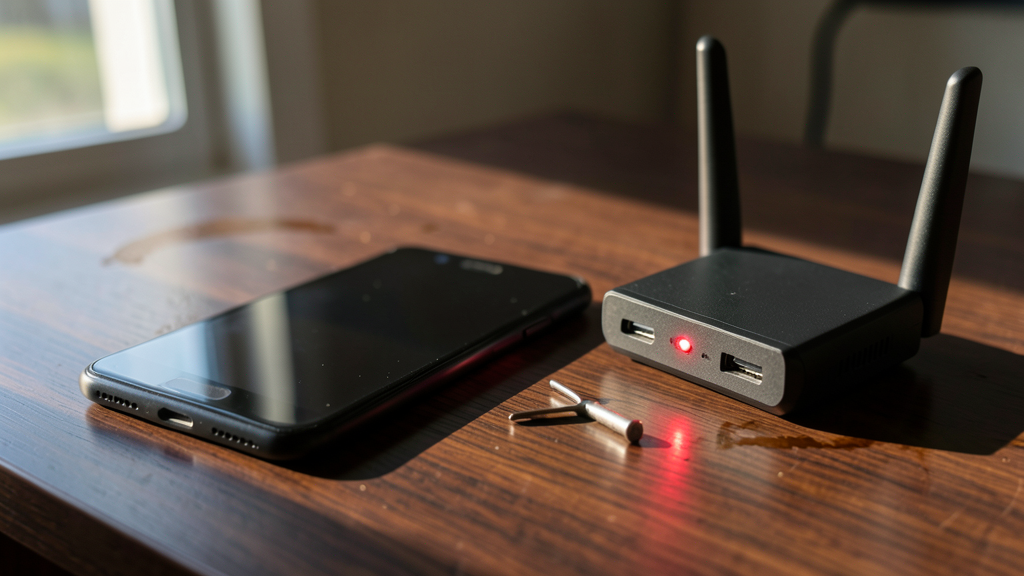
For remote workers in mainland China, use an international travel eSIM as your primary mobile data connection for standard work apps, and keep a preinstalled standalone VPN as an operational backup. 1, 2 Certain international travel eSIM profiles route mobile data breakout via roaming partner points of presence outside mainland China, which may allow standard business apps to reach external servers without a third-party VPN. 1 By 2026, guides increasingly recommend pairing a travel eSIM with a preinstalled obfuscated VPN to handle connections when local network conditions require one. 2
Key facts
- Under the GSMA SGP.22 consumer eSIM RSP spec, roaming typically uses Home-Routing to anchor user traffic at the home network gateway rather than local breakout nodes. 3
- Airalo's product page identifies local host networks like China Unicom, with vendor commentary noting certain plans may route outbound traffic via partner roaming breakouts. 1
- Multiple independent testers since 2025 name ExpressVPN among the most consistently working VPNs in China across editorial field test runs. 4
- Guides increasingly recommend setting up an international travel eSIM alongside a preinstalled obfuscated VPN and offline installers before arrival. 2
| Connectivity option | Primary traffic routing | Third-party VPN requirement | Best suited for |
|---|---|---|---|
| Home-routed travel eSIM | Roaming partner breakout outside mainland China 1, 3 | Optional for standard apps depending on plan 1 | Primary mobile data for standard business apps on cellular networks |
| Local access / fixed Wi-Fi with Standalone VPN | Domestic host network routed through encrypted tunnel | Recommended to reach external services 2 | Fixed-line Wi-Fi networks and restricted internal endpoints |
| Regional cross-border eSIM (e.g. Unicom HK) | Regional carrier infrastructure (e.g. community-reported $60 for 100GB / 180 days) 5 | Plan-specific; some report normal access without VPN 5 | Extended stays needing large data packages without local contracts |
Does a China travel eSIM remove the VPN?
An international travel eSIM can handle your standard work apps without a standalone VPN, but only if its mobile traffic routes through an external breakout point 1.
The underlying mechanism comes down to cellular architecture rather than circumvention software. According to the GSMA SGP.22 eSIM specification, consumer eSIM roaming typically operates via Home-Routing, where user plane data anchors directly at the home network gateway unless Local Breakout is negotiated 3. Because traffic anchors outside the local host network, roaming carries your IP address out of domestic mainland packet cores 3. For a remote worker, this means tools like Slack, Google Workspace, and project boards connect directly through partner roaming points of presence without requiring a local VPN client running in the background 1.
[Phone in Shanghai]
 │
 ▼ (Encrypted Cellular Tunnel)
[Local Chinese Host Tower]
 │
 ▼ (GSMA Home-Routing)
[External Roaming Gateway / Hong Kong or Singapore POP]
 │
 ▼ (Open Internet Exit)
[Unfiltered Work Apps & Servers]
Do not assume every travel profile behaves identically. Some international travel eSIM products route mobile data breakout via roaming partner POPs outside mainland China, which allows standard work traffic to reach foreign servers cleanly, but this routing remains strictly vendor- and plan-specific 1. You have to verify the exact breakout behavior with your provider before boarding the flight 1.
The biggest operational problem right now is marketing noise. Major vendor and editorial pages commonly publish zero reproducible China-eSIM test methodologies, omitting measured latency, throughput, or kill-switch benchmarks across specific carrier APNs and cities 6.
┌──────────────────────────────────────┬────────────────────────────────────────┐
│ Connection Model │ Practical Operational Reality │
├──────────────────────────────────────┼────────────────────────────────────────┤
│ Home-Routed Travel eSIM │ Mobile data exits via foreign POPs; │
│ (Standard GSMA Architecture) │ bypasses local filtering directly [[c1], [c2]].│
├──────────────────────────────────────┼────────────────────────────────────────┤
│ Unverified / Local Breakout eSIM │ Subject to local filtering; requires │
│ │ a secondary obfuscated VPN tool [1](https://www.airalo.com/china-esim). │
└──────────────────────────────────────┴────────────────────────────────────────┘
Do You Need a Standalone VPN on Roaming Data?
Consider how commercial travel profiles handle traffic on the ground. On its product specifications, Airalo's China eSIM page identifies local Chinese host networks such as China Unicom 1. Vendor materials and technical commentary indicate that certain prepaid eSIM plans route outbound traffic through partner roaming breakouts, which can bypass mainland filtering for standard web browsing 1. However, exact routing behavior and whether traffic exits through hubs like Hong Kong or Singapore remains vendor- and plan-specific, requiring verification on the provider's product page before departure 1.
Field experience from remote workers reflects this exact split. Discussions on Reddit's r/chinalife show users running China Unicom HK or comparable regional eSIM plans who access normal internet services over 5G data without launching a VPN 5. These community reports are anecdotal, and performance varies depending on the specific APN configuration, the local city network, and the provisioned plan 5.
Testing from TheBestVPN shows that multiple independent reviewers since 2025 identify ExpressVPN among the most consistently functional options during mainland field tests 4. In those editorial test runs, the client reliably reached blocked destinations across different local network environments 4.
Plan your setup around these two distinct layers. Treat an international roaming eSIM as your primary mobile pipe for messaging and email, but keep a proven tool like ExpressVPN installed on your hardware before crossing the border.
Which VPN Setup Actually Survives Mainland Networks?
Do not rely on a single VPN client as your sole connection method in China. Multiple editorial test suites that ran dozens of services across Chinese cities found that only a subset consistently worked, confirming that no single provider remains universally reliable across all municipal networks, local ISPs, and testing dates 4.
Marketing landing pages will try to convince you otherwise. Vendor pages that publish China performance numbers, such as NordVPN's brand page, present attractive speed and latency claims without providing an independent, reproducible testing methodology 7. Because those marketing numbers are self-reported and impossible to verify independently, treating them as guarantees for critical client calls is a serious mistake 7.
The reality on the ground is fragmented. A server location that connects instantly over an office line in Shanghai might stall completely on a hotel connection in Chengdu. Editorial testing across multiple mainland metros proved that connection success fluctuates constantly between providers and networks 4. If you land with only one consumer VPN installed on your laptop, an unexpected protocol block can leave you completely cut off from your work infrastructure before you can download an alternative.
Because of these network shifts, practical guidance has changed. By 2026, many connectivity guides increasingly recommend relying on a primary travel eSIM or certified international roaming connection for predictable mobile data, while maintaining a preinstalled obfuscated VPN alongside offline installer files and mirror domains strictly as operational backups 2.
+-------------------------------------------------------------------+
| RECOMMENDED REMOTE WORK SETUP (2026) |
+-------------------------------------------------------------------+
| |
| |
+-------------------------------------------------------------------+
| Fallback Path: Pre-configured obfuscated VPN + offline mirror |
| -> Used for fixed-line Wi-Fi and blocked services |
+-------------------------------------------------------------------+
Set up your international roaming profile or travel eSIM first so your primary mobile connection functions the moment you land 2. Then, install at least one VPN client with obfuscation capabilities on your hardware, download the offline standalone installation files onto a USB drive or local folder, and save functional mirror URLs 2. That redundancy ensures that when local fixed lines fail, your client deliverables do not.
Frequently asked questions
Can I access standard work tools without turning on a VPN?
Some international travel eSIMs route mobile data breakout via partner points of presence outside mainland China, which can allow standard business applications to connect without a standalone VPN client 1. However, this routing behavior is specific to individual vendors and plans, so you must verify the product specifications before leaving 1.
Are bundled eSIM VPNs reliable enough to replace a standalone client?
Certain providers advertise built-in VPN features with their profiles, such as Holafly's China eSIM 6. You should check the vendor's documentation directly to confirm exact protocol behavior, platform support, and obfuscation capabilities rather than assuming complete coverage 6.
How much mobile data budget should I plan for?
Retail prices vary considerably, and promotional community offers fluctuate. For example, a Reddit r/chinalife post cited a China Unicom HK plan at $60 for 100GB over 180 days, though community figures do not represent official retail guarantees 5. Always verify active pricing directly with providers 5.
Can I install my VPN software after arriving in China?
Do not wait until arrival. Recent connectivity guides advise completing your setup beforehand, keeping a preinstalled obfuscated VPN alongside offline installers and mirror links as operational backups 2. Having offline setup files stored locally prevents lockouts if you hit network restrictions on fixed connections 2.
What to do next
Get an international roaming eSIM from a provider like Airalo before departure to serve as your primary mobile data pipe 1. Check the product listing to confirm its breakout routing characteristics [[c1], [c8]].
Next, preinstall an obfuscated VPN client on your devices prior to travel 2. Field testing across Chinese cities since 2025 has repeatedly found ExpressVPN among the most consistently working tools for reaching blocked destinations 4. Store offline installer packages on a local drive and record verified mirror URLs in case client-side updates fail 2.
Use the travel eSIM for routine mobile tasks, and keep the standalone VPN ready as a secondary tool 2.
This dual configuration is unsuitable for short-term transit passengers who only require basic local maps for an afternoon. It is designed for remote professionals who cannot afford connection failures across varying municipal networks and host carriers 4.
- https://www.airalo.com/china-esim
- https://www.gsma.com/solutions-and-impact/technologies/esim/wp-content/uploads/2020/06/SGP.22-v2.2.2.pdf
- https://thebestvpn.com/best-china-vpn-tested/
- https://www.trip.com/guide/phone/best-vpn-in-china.html
- https://www.reddit.com/r/chinalife/comments/1s99wej/vpn_and_esim_megathread_april_2026/
- https://esim.holafly.com/internet/best-vpn-china/
- https://nordvpn.bbsr.one/nordvpn-in-china