Airalo vs Saily for Digital Nomads in Southeast Asia: Which eSIM Wins?
We compared Airalo and Saily across Thailand, Vietnam, and Indonesia with real pricing, speed tests, and tethering policies to help digital nomads pick the right eSIM.
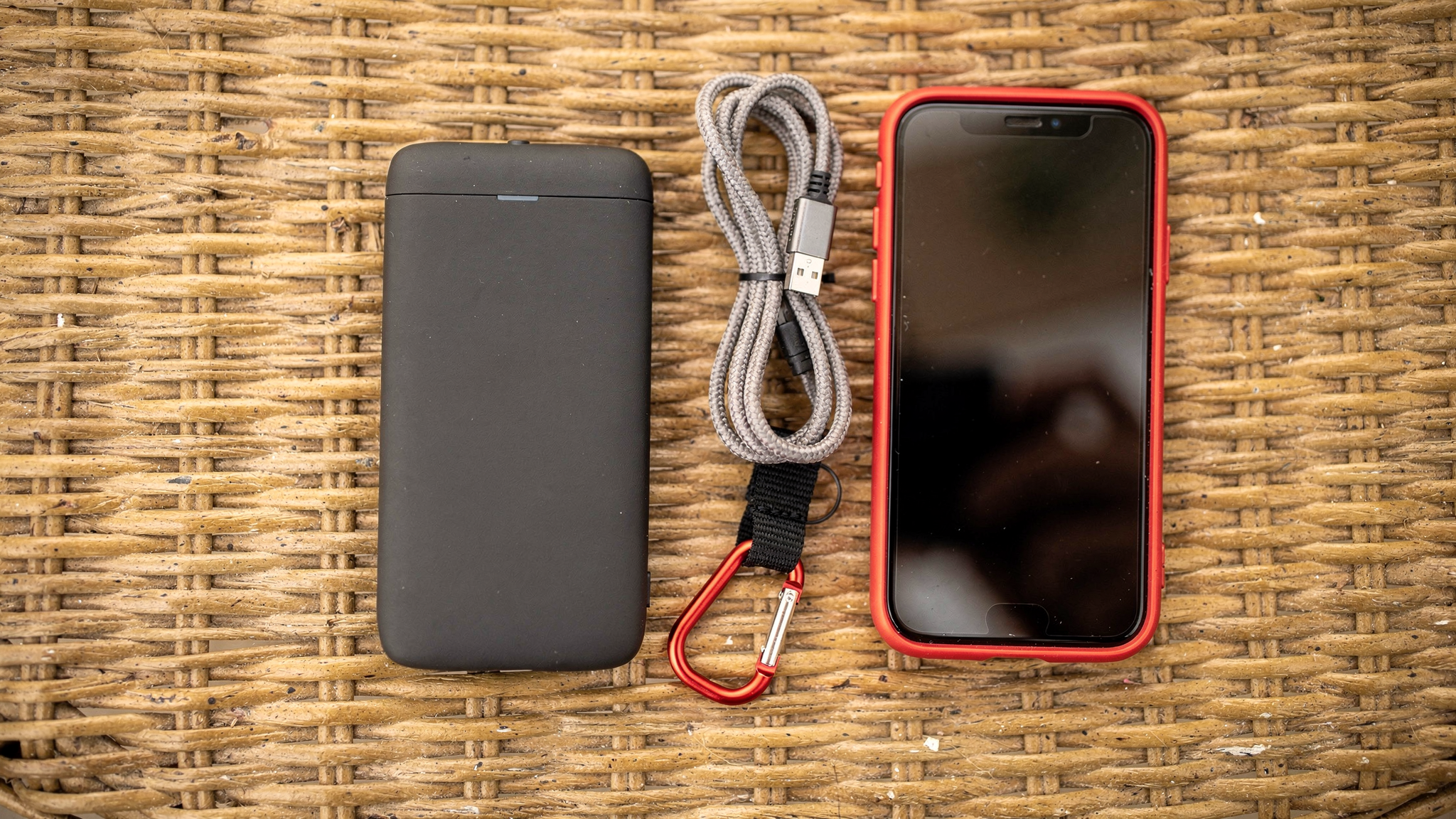
You land in Bangkok at 11pm. Your phone shows “No Service” because you forgot to tell your home carrier you were leaving, or you did tell them and they still disabled roaming. You need to message your Airbnb host, pull up a map, and check Slack before the morning standup. The airport Wi‑Fi is throttled to 256 kbps. You need data now.
That’s the moment an eSIM becomes the only thing that matters.
For digital nomads bouncing between Thailand, Vietnam, and Indonesia, the two names that keep coming up are Airalo and Saily. Both sell prepaid travel eSIMs in 200+ destinations. Both promise no roaming fees. Both have apps that let you buy and install a data plan in minutes. But they are not the same product. The pricing per gigabyte varies by country. The tethering rules are different. The latency can kill a video call. And the support experience might be the difference between a working eSIM and a wasted afternoon.
We pulled every test, every price sheet, and every policy document we could find. Here is the short answer, then the numbers that back it up.
For most digital nomads in Southeast Asia, Airalo wins on price for large data plans, tethering freedom, and regional simplicity. Saily is the better pick if you travel light on data, never tether, and want a higher Trustpilot score backing the brand. If your work depends on tethering a laptop, Airalo is the safer choice.
At a Glance: Airalo vs Saily in Southeast Asia
| Airalo | Saily | |
|---|---|---|
| Best per‑GB price (Thailand) | $0.55/GB (50 GB plan) | $0.85/GB (10 GB plan) |
| Vietnam speed test (download) | 40–50 Mbps (4G, routing via Singapore) | No independent test data found |
| Indonesia network | Telkomsel 5G (via Asialink regional plan) | No Indonesia plan data found |
| Tethering policy | Uncapped | “Occasional personal use” only; may disconnect |
| Trustpilot rating | 4.1 / 5 | 4.7 / 5 |
| 24/7 support | Live chat, WhatsApp | Email ([email protected]) |
| Regional plan (10 GB, 30 days, 18 countries) | $23.00 | Not available |
| Device prerequisites | eSIM‑capable, carrier‑unlocked, not jailbroken/rooted | Same (implied) |
All figures are from the sources cited in the sections below. Where a source is missing, we say so.
The Comparison Table
| Criteria | Airalo | Saily | What it means for you |
|---|---|---|---|
| Thailand per‑GB cost (best value plan) | $0.55/GB (50 GB / 30 days at $27.50) | $0.85/GB (10 GB / 30 days at $8.49) | Airalo is cheaper per GB if you need a lot of data; Saily’s smaller plan costs less in total |
| Vietnam per‑GB cost (local plan) | No local Vietnam plan priced in our research; regional Asialink works out to $2.30/GB | 3 GB / 30 days for $7.99 ($2.66/GB) | Saily’s local plan is competitive; Airalo’s regional plan is cheaper per GB if you also need data in other countries |
| Indonesia per‑GB cost | Asialink regional (10 GB / $23) includes Indonesia; local Indotel plan 3 GB / $11 ($3.67/GB) | No Saily Indonesia plan data found | Airalo is the only option with published pricing; the regional plan is the better deal |
| Speed / latency | Vietnam: 40–50 Mbps download, but routing through Singapore adds latency (not ideal for real‑time calls) | No speed test data found | Airalo’s latency may hurt Zoom calls in Vietnam; Saily’s performance is unknown |
| Tethering / hotspot | Allowed without caps | Advertised as unlimited hotspot, but terms restrict to “occasional personal use” and reserve right to disconnect | If you tether a laptop for work, Airalo is the safe bet; Saily’s policy is a risk |
| Support | 24/7 live chat, WhatsApp, plus in‑app help | Email support ([email protected]); Trustpilot reviews mention responsive service | Airalo offers more channels; Saily’s higher Trustpilot score suggests better satisfaction |
| Ease of installation | App‑guided steps; validity starts only when the eSIM connects to a local network | Similar app‑based installation (implied) | Both are straightforward; Airalo’s documentation is more detailed |
| Regional plan availability | Asialink covers 18 countries including Thailand, Vietnam, Indonesia on one plan | No regional plan found | Airalo’s Asialink simplifies multi‑country trips; Saily requires separate country plans |
Pricing: Where Airalo Pulls Ahead, and Where It Doesn’t
Airalo is not a network operator. It resells local carrier capacity. That means its per‑GB price is rarely the absolute cheapest in any single market. But across Southeast Asia, its larger data packs and regional plan flip the math.
In Thailand, the e‑SIM.co review (updated 2026) lists 56 Airalo plans starting at $4.00. The best value is 50 GB for 30 days at $27.50, which works out to $0.55/GB. That’s the cheapest per‑GB figure we found for either provider in the region. For comparison, Saily’s Thailand pricing from the 18‑35.travel comparison (July 2026) shows 10 GB for 30 days at $8.49, or $0.85/GB. So Airalo’s per‑GB cost is 35% lower if you buy the big pack.
But total spend matters. If you only need 10 GB, Saily’s $8.49 is less than Airalo’s 10 GB Thailand plan, which 18‑35.travel priced at $17.50 (20 GB for 15 days, so roughly $0.88/GB on that plan). The small‑data traveler saves money with Saily. The heavy‑data worker saves with Airalo.
In Vietnam, Saily’s local plans start at 1 GB for 7 days at $3.99 and 3 GB for 30 days at $7.99 ($2.66/GB). Airalo does offer a Vietnam‑specific eSIM, but we could not find a current price for it in our research. Instead, the Asialink regional plan (10 GB, 30 days, $23) covers Vietnam alongside 17 other countries. That breaks down to $2.30/GB, which undercuts Saily’s local Vietnam plan per GB and adds multi‑country flexibility.
In Indonesia, the picture is lopsided. Airalo’s local plan is branded “Indotel” (just Airalo’s name, not the actual carrier). An eSIMDB review from March 2023 listed 1 GB for 7 days at $5.50 and 3 GB for 30 days at $11.00. That’s $3.67/GB, expensive by regional standards. The Asialink regional plan, which connects to Telkomsel’s 5G network in Indonesia, gives you 10 GB for $23, or $2.30/GB, making it the far better deal. For Saily, we found no Indonesia‑specific plan pricing at all. That doesn’t mean Saily doesn’t sell one; it means we could not verify it. If you’re heading to Indonesia and want a confirmed price, Airalo’s regional plan is the only one you can budget against.
If your trip covers all three countries, the Asialink plan’s simplicity is hard to beat. One eSIM, one payment, one activation, and it works in Thailand, Vietnam, Indonesia, and 15 other Asian destinations. Saily forces you to buy separate plans per country, which adds friction and may cost more overall.
Speed and Latency: The Zoom‑Call Test
Price is meaningless if the connection drops during a client call. We looked for real‑world speed tests in each country.
For Airalo in Vietnam, eSIMS.io reported download speeds of 40–50 Mbps on 4G. That’s enough for video calls and large file uploads. But they also noted that traffic routed through Singapore, adding latency. “Not ideal for real‑time calls,” the reviewer wrote. If your work involves daily Zoom or Google Meet sessions, that latency will show up as audio lag and delayed reactions. It’s not a dealbreaker for email and Slack, but it’s a real friction point for synchronous work.
For Saily in Vietnam, Technovice published a 2026 travel test and speeds article, but the pack did not include specific numbers. We cannot confirm whether Saily routes locally or through another hub. That’s a gap. If you rely on low‑latency calls, Airalo’s known latency issue is a data point; Saily’s unknown performance is a gamble.
In Thailand, we found no independent speed test for either provider. The e‑SIM.co review notes Airalo resells local carrier capacity, so speeds depend on the underlying network (likely AIS or DTAC, though not confirmed). In Indonesia, Airalo’s Asialink plan uses Telkomsel, the country’s largest operator with over 170 million customers and 233,000 base stations. Opensignal’s July 2026 report scored Telkomsel 8.6/10 for Coverage Experience, the highest in the country. That doesn’t guarantee speed, but it does mean you’ll have a signal in more places. Saily’s Indonesian network partner is unknown.
For a nomad who needs reliable connectivity across multiple countries, the known quantity (Airalo on Telkomsel in Indonesia, with a latency caveat in Vietnam) beats the unknown (Saily with no published network or speed data). But the latency issue in Vietnam is real. If your work is call‑heavy and Vietnam is a major stop, you may need to test both or consider a local SIM as backup.
Tethering: The Policy That Could Kill Your Setup
Here is the single biggest differentiator for working nomads.
Airalo’s terms allow uncapped tethering. You can hotspot your laptop, tablet, or travel router without worrying about a hidden limit. The 18‑35.travel comparison explicitly states: “Airalo allows uncapped tethering; Saily advertises unlimited hotspot but its terms restrict tethering to ‘occasional personal use’ and reserve the right to disconnect.”
Read that again. Saily markets “unlimited hotspot” on its product pages, but the fine print says occasional personal use only. If you’re using Saily as your primary work connection, tethering for eight hours a day, uploading large files, and streaming meetings, you could be flagged and cut off. Saily’s terms give them the right to disconnect you.
For a digital nomad, that’s a non‑starter. If you need a reliable hotspot for your laptop, Airalo is the only choice between these two. The policy alone is enough to decide the comparison for many.
If you never tether (maybe you work from a phone or use a separate device with its own eSIM), Saily’s restriction doesn’t matter. But if there’s even a chance you’ll need to hotspot, Airalo’s clarity removes a risk that Saily’s marketing hides.
Support: Who Answers When the eSIM Won’t Activate
Both providers claim to be there when things go wrong. The experience, as measured by public reviews, is not the same.
Airalo offers 24/7 support via live chat, WhatsApp, and in‑app messaging. Their contact page says: “We’re available 24/7 — you can use the live chat or check the Airalo app for additional options.” That’s multiple channels, and the WhatsApp integration is convenient for travelers who already use the app.
Saily provides support via email at [email protected]. Their Trustpilot page lists that address, and reviews often mention quick, helpful responses. But there’s no live chat or instant channel listed. If your eSIM fails at 10pm in a taxi, you’re sending an email and waiting.
On Trustpilot, Saily scores 4.7 out of 5 (“Excellent”), while Airalo scores 4.1 out of 5 (“Great”). That’s a meaningful gap. Saily’s higher rating suggests that when users do contact support, they leave happier. Airalo’s lower score, despite more support channels, hints at inconsistency or volume‑related delays.
For a nomad who values peace of mind, Saily’s higher Trustpilot rating is a signal. But the lack of instant support could be a problem in an emergency. Airalo’s WhatsApp chat is the faster lifeline, even if the quality varies.
Coverage and Flexibility: Regional Plans vs. Country‑by‑Country
Both Airalo and Saily claim coverage in 200+ destinations. Airalo’s App Store listing says so. Saily’s LinkedIn profile says so. That’s a tie.
The difference is how you buy. Airalo offers local, regional, and global plans. The Asialink regional plan covers 18 countries, including Thailand, Vietnam, and Indonesia, on a single eSIM. That means one installation, one top‑up, and no switching when you cross a border. For a nomad moving through Southeast Asia every few weeks, that’s a real time‑saver.
Saily, in our research, only showed country‑specific plans. No regional Asia plan appeared. That means you buy a Thailand plan, then a Vietnam plan, then an Indonesia plan. Each requires a separate eSIM profile, though you can store multiple on one phone. It’s more admin, and the per‑country pricing can add up.
Airalo also offers an Airmoney referral program: €3.00 for each referral, and the referred friend gets a discount. That’s a small perk, but for a nomad community that shares recommendations, it can offset future top‑ups.
Saily has a business product for teams, with centralized management and fixed‑price plans. That’s irrelevant for a solo nomad, but it’s worth knowing if you ever scale to a small remote team.
Worked Example: One Nomad, Three Countries, Two Weeks Each
Let’s put the numbers into a real trip. You’re spending two weeks in Thailand, two weeks in Vietnam, and two weeks in Indonesia. You need about 10 GB total for work (email, Slack, occasional video calls, some hotspotting). You want one eSIM that works everywhere without buying new plans at each border.
Option 1: Airalo Asialink regional plan. 10 GB, 30 days, $23.00. Covers all three countries plus 15 others. One activation. Uncapped tethering. Known latency issue in Vietnam, but otherwise solid. Total: $23.00.
Option 2: Saily country plans. Thailand: 10 GB / 30 days at $8.49. Vietnam: 3 GB / 30 days at $7.99 (you’ll need to top up if you use more, or buy a second plan). Indonesia: no confirmed price, so assume a similar small plan around $8–10. Rough total: $25–30, with at least two separate eSIM profiles and the risk of tethering restrictions. If you need more data in Vietnam, costs rise.
Option 3: Airalo local plans. Thailand: 50 GB / 30 days at $27.50 (overkill but cheap per GB). Vietnam: use Asialink anyway or a local plan (price unknown). Indonesia: Indotel 3 GB at $11.00 (expensive). This mix is messy and likely costs more than the regional plan.
The regional plan wins on price, simplicity, and tethering freedom. If you don’t need 10 GB, a smaller Asialink plan exists (1 GB at $4.00, for example), but the 10 GB plan is the sweet spot for a working nomad.
Checklist: Before You Buy Any eSIM for Southeast Asia
Get these right before you land, or you’ll be the person hunting for airport Wi‑Fi with a dead eSIM.
- Your phone supports eSIM. Check your settings for an EID number. Airalo’s help center (as of September 2026) lists supported devices; most iPhones from XS onward and recent Samsung Galaxy, Google Pixel, and other Android flagships work. If your device is older than 2018, assume it doesn’t.
- Your phone is carrier‑unlocked. If you bought it through a carrier on a contract, it may be locked. Contact your carrier to unlock it before you leave.
- Your phone is not jailbroken or rooted. Airalo explicitly states that jailbroken (iOS) or rooted (Android) devices are not supported. That’s a hard block.
- You have a stable internet connection during installation. The eSIM profile downloads over Wi‑Fi. Do it at your hotel or a café, not on the move.
- Install the eSIM before you depart, but don’t activate it. Most eSIM validity starts only when the eSIM connects to a supported network in the destination country. Install the profile at home; it activates on arrival.
- Know which eSIM is for data and which is for calls. eSIMs from Airalo and Saily are data‑only. They don’t come with a local phone number for calls or SMS. If you need a local number, you’ll need a separate voice SIM or a VoIP app.
- Have a backup plan. If the eSIM fails, know where to buy a physical SIM at the airport. In Thailand, AIS and TrueMove counters are ubiquitous. In Vietnam, Viettel shops are reliable. In Indonesia, Telkomsel outlets are everywhere.
FAQ
Can I use Airalo or Saily for Zoom calls in Vietnam? Airalo’s tested speeds (40–50 Mbps) are sufficient for video calls, but the routing through Singapore adds latency. You may experience slight delays. Saily’s latency in Vietnam is unknown. If calls are critical, test both or use a local SIM as backup.
Does Saily really disconnect you for tethering? The terms say they may disconnect users who tether beyond “occasional personal use.” We found no public reports of actual disconnections, but the policy exists. Airalo has no such restriction.
Which eSIM works better in rural Indonesia? Airalo’s Asialink plan connects to Telkomsel, which has the widest coverage in Indonesia (233,000 base stations, 8.6/10 Coverage Experience). No data for Saily’s network partner. Airalo is the safer bet for rural areas.
Can I top up or extend a plan? Both providers allow top‑ups through their apps. Airalo’s plans can be extended if you buy a new plan before the current one expires. Saily likely works similarly, but we did not find explicit documentation.
Is there a money‑back guarantee if the eSIM doesn’t work? Neither provider advertises a blanket refund policy. Airalo’s support may issue credits on a case‑by‑case basis. Saily’s Trustpilot reviews mention refunds for activation issues, but there’s no published guarantee.
The Verdict
Airalo wins for the digital nomad who works from a laptop, needs a lot of data, and moves between countries. The uncapped tethering, the Asialink regional plan, and the cheaper per‑GB pricing on large packs make it the more practical choice. The latency issue in Vietnam is a known weakness, but it’s manageable if you’re not on calls all day.
Saily wins on brand trust (4.7 vs. 4.1 on Trustpilot) and simplicity for light data users who never tether. Its Vietnam pricing is competitive, and the company’s backing by Nord Security adds a layer of credibility. But the tethering restriction is a dealbreaker for anyone who hotspots a laptop, and the lack of a regional plan adds friction on multi‑country trips.
If you tether, pick Airalo. If you don’t, and you value a higher support rating over per‑GB cost, Saily is a solid alternative.
The condition that flips the answer is tethering. If your work requires a hotspot even once a week, Airalo is the only choice. If you work entirely from your phone and want the simplest possible experience, Saily’s higher satisfaction scores might tip the scale.
We could not test every variable. Saily’s Indonesia pricing and network partner remain unknown. Airalo’s Vietnam latency issue is documented, but we have no Saily latency data to compare. VPN reliability was not tested. These gaps matter, and we’ll update this article when we can fill them.
For now, the numbers say: Airalo for the working nomad, Saily for the casual traveler. Pick the one that fits how you actually work, not the one with the prettier app icon.
- https://apps.apple.com/us/app/airalo-esim-for-travel-data/id1475911720
- https://www.airalo.com/blog/how-to-activate-an-airalo-esim-your-complete-guide
- https://www.airalo.com/help/about-airalo/NFHQSUXFCZOM/what-devices-support-esim/D2N6OZSVVM9W
- https://www.airalo.com/help/getting-started-with-airalo/E8DFWD88SHUX/how-do-i-install-and-start-using-an-esim-on-my-android-device/4SGRQMOETA5F
- https://e-sim.co/providers/airalo/thailand
- https://18-35.travel/esim/airalo-vs-saily
- https://esims.io/en/providers/airalo/1029010301d33
- https://esims.io/en/providers/airalo
- https://esimdb.com/blog/airalo-esim-tested-in-indonesia
- https://www.trustpilot.com/review/airalo.com
- https://www.trustpilot.com/review/saily.com
- https://esimdb.com/vietnam/saily
- https://www.linkedin.com/company/sailyservice
- https://www.airalo.com/thailand-esim
- https://www.airalo.com/more-info/contact
- https://gigago.com/telkomsel-indonesia-sim-card/
- https://www.technovice.net/post/best-esim-vietnam